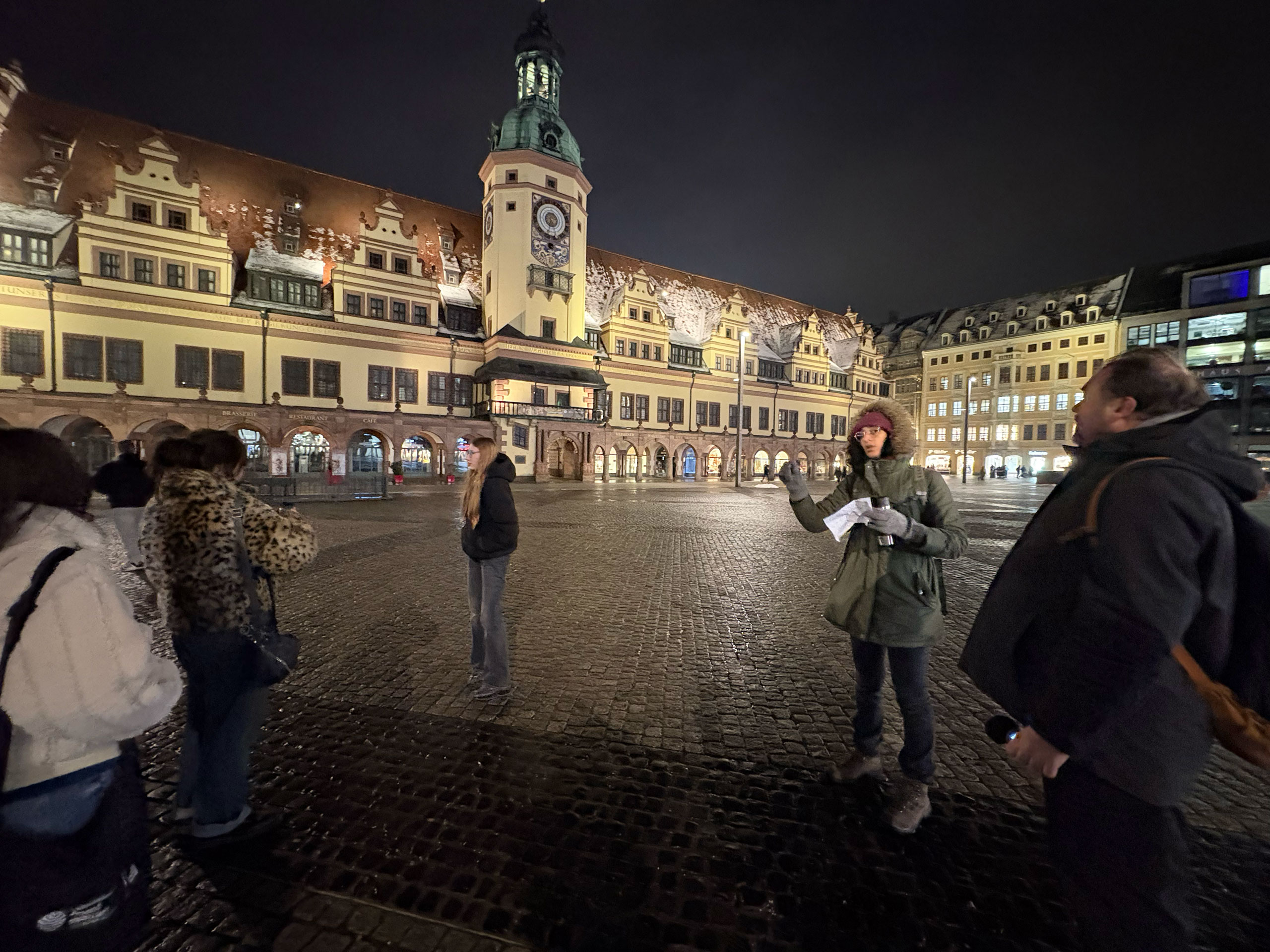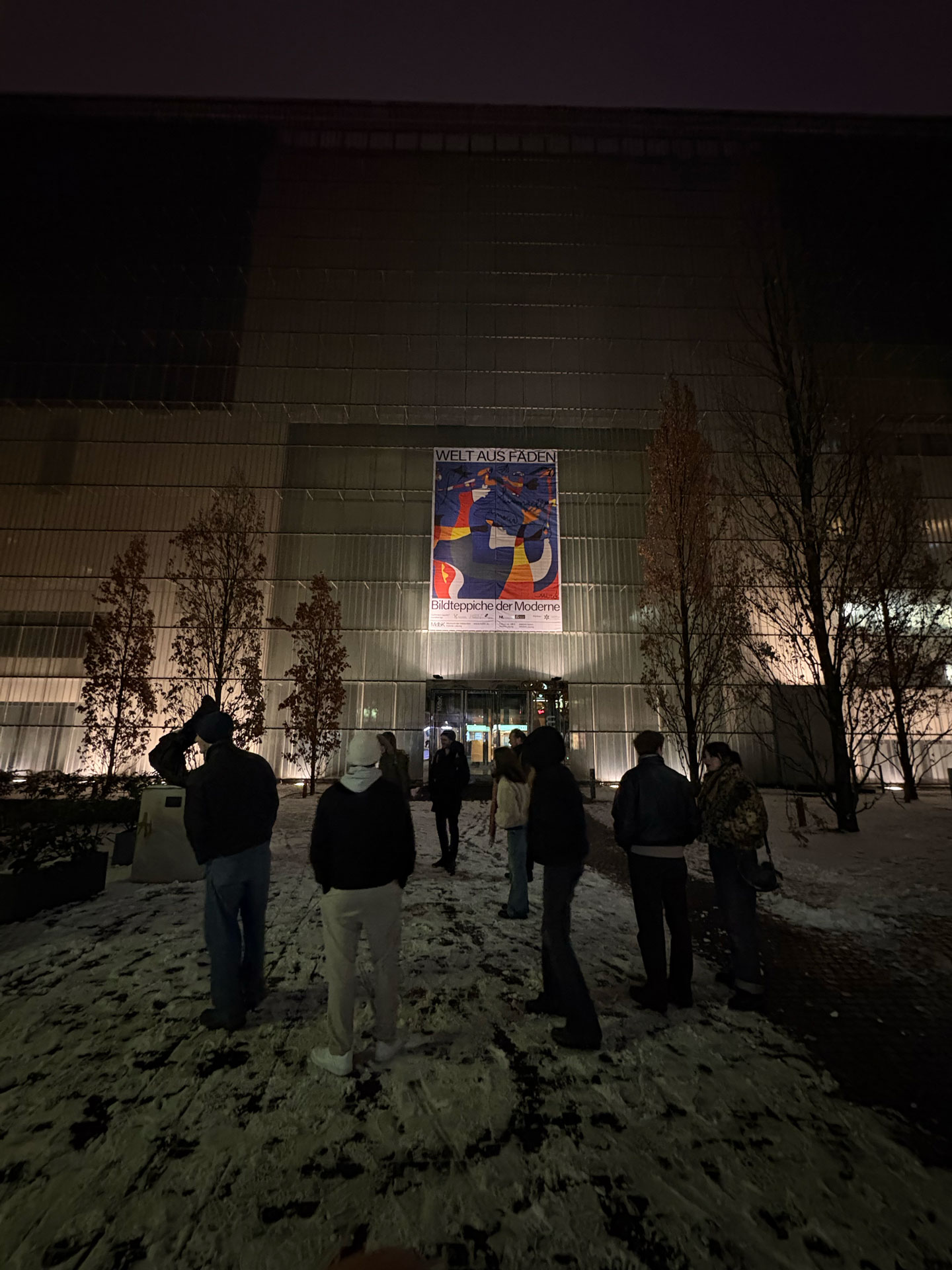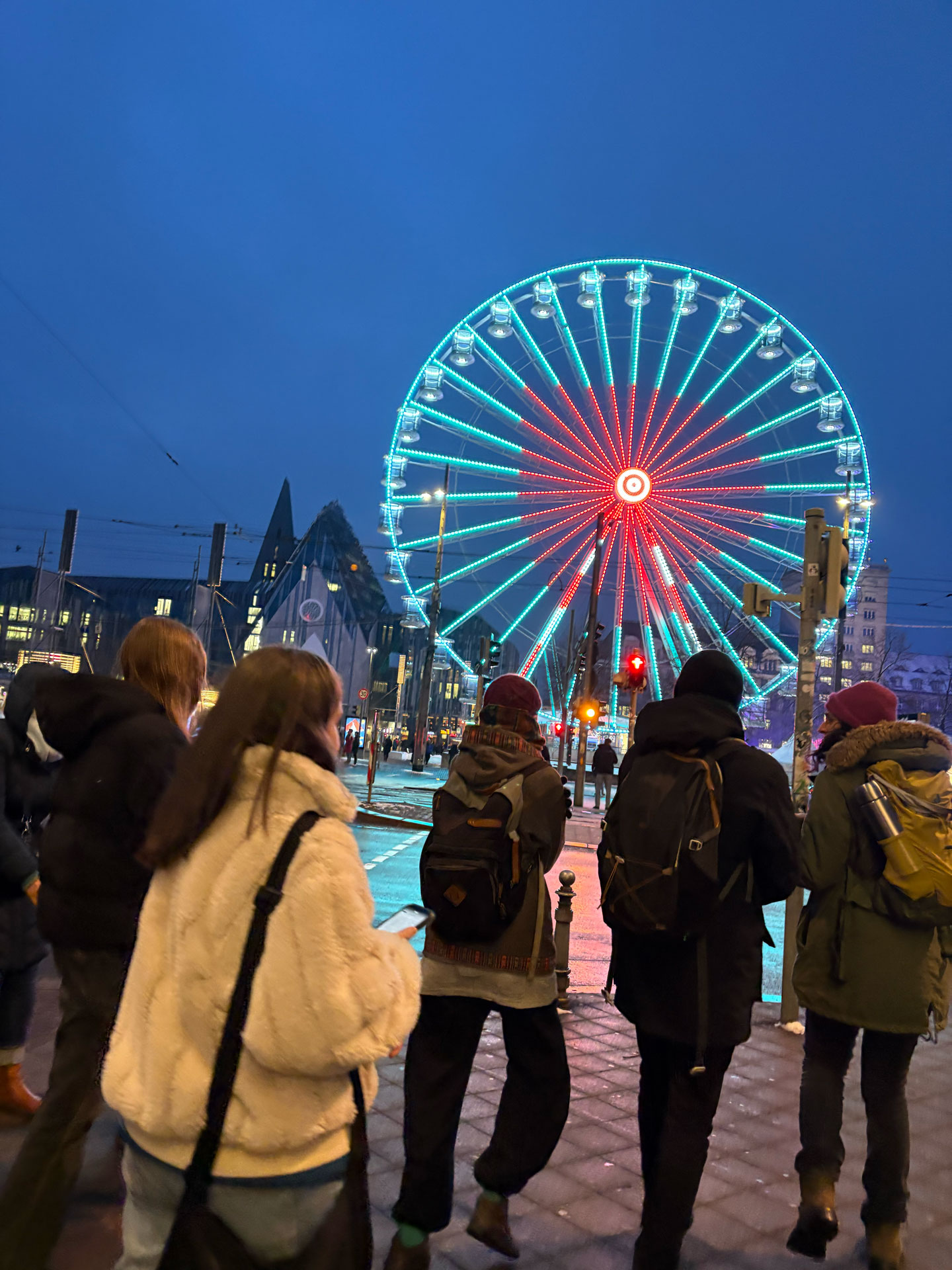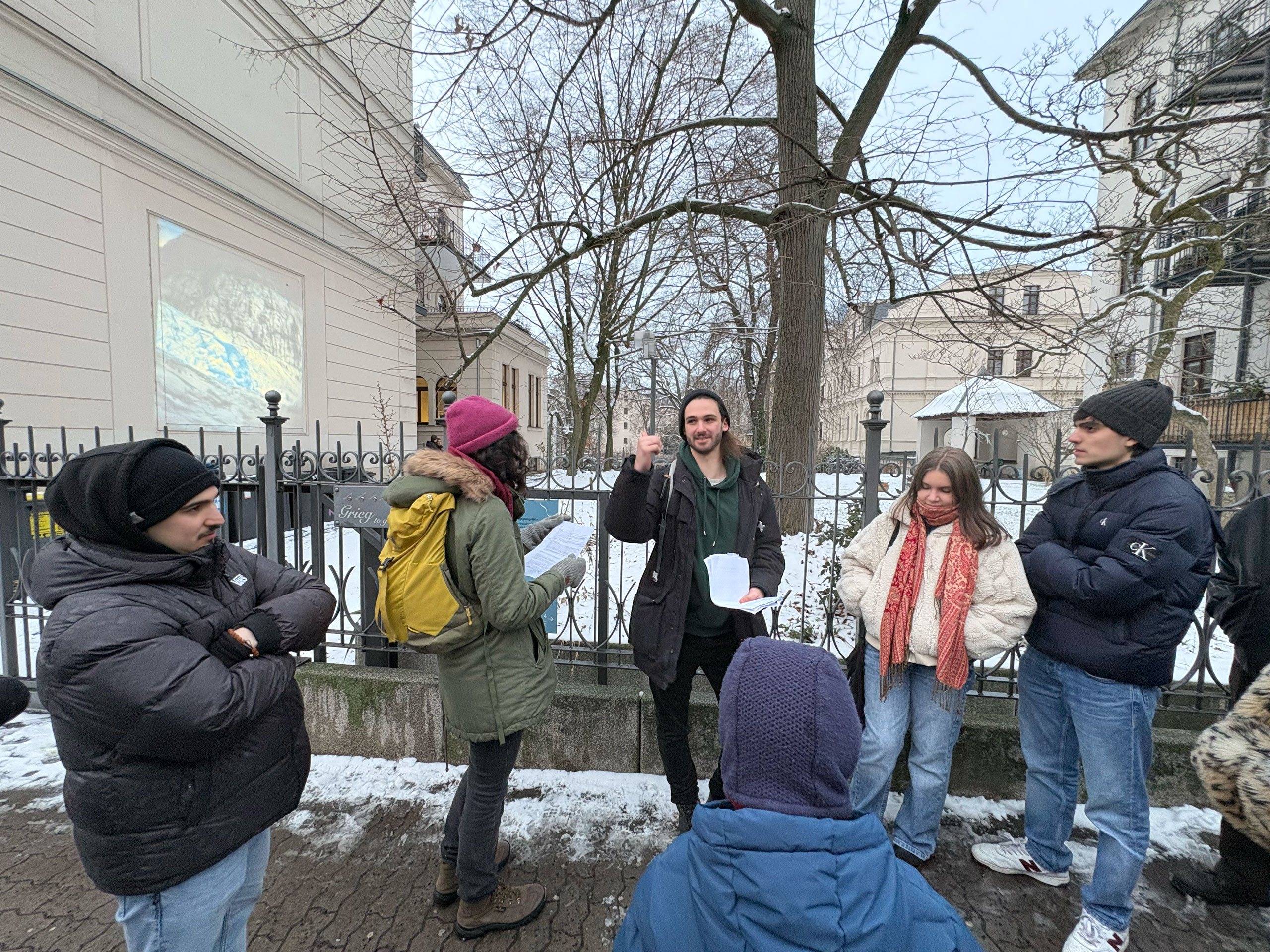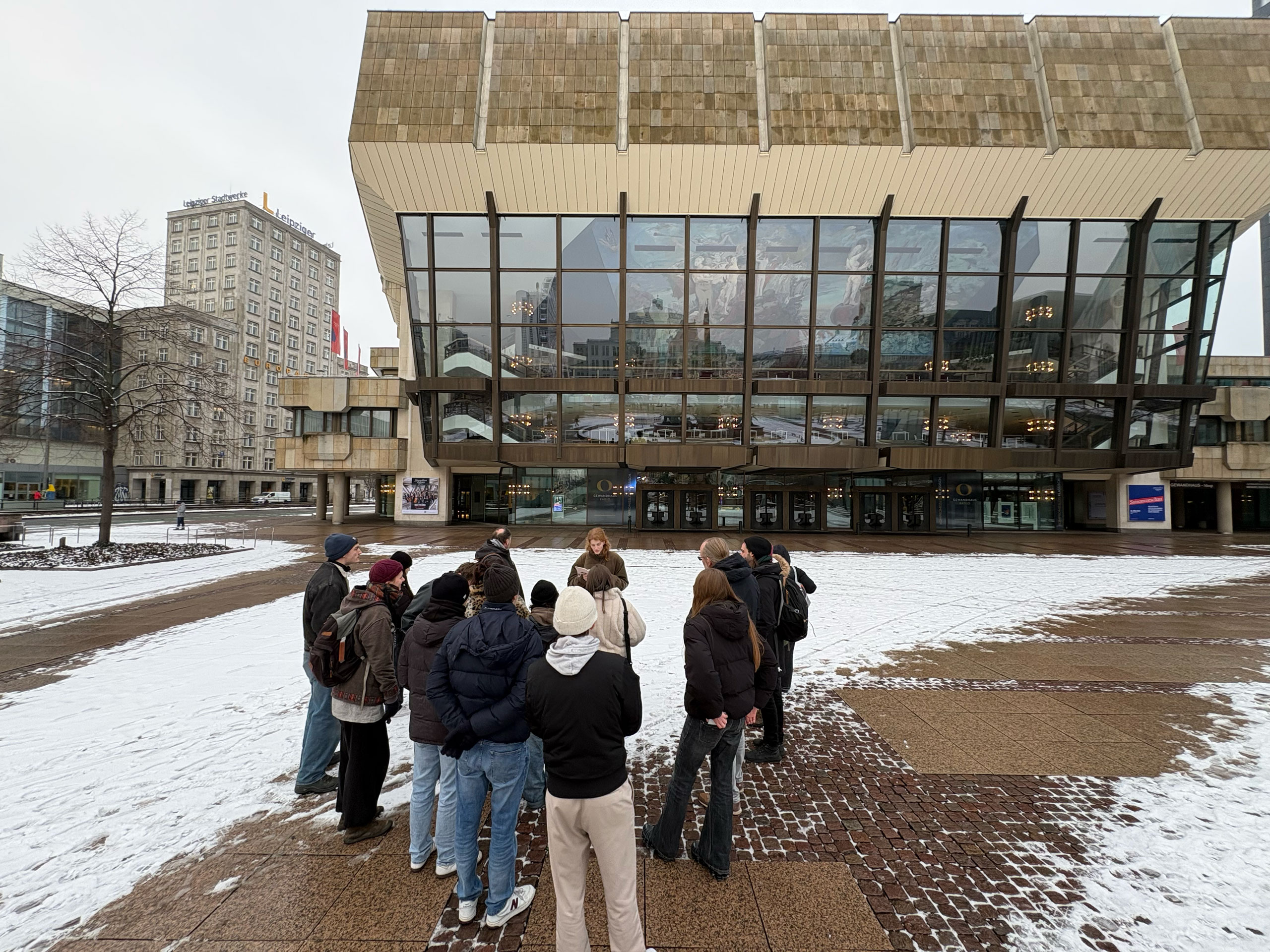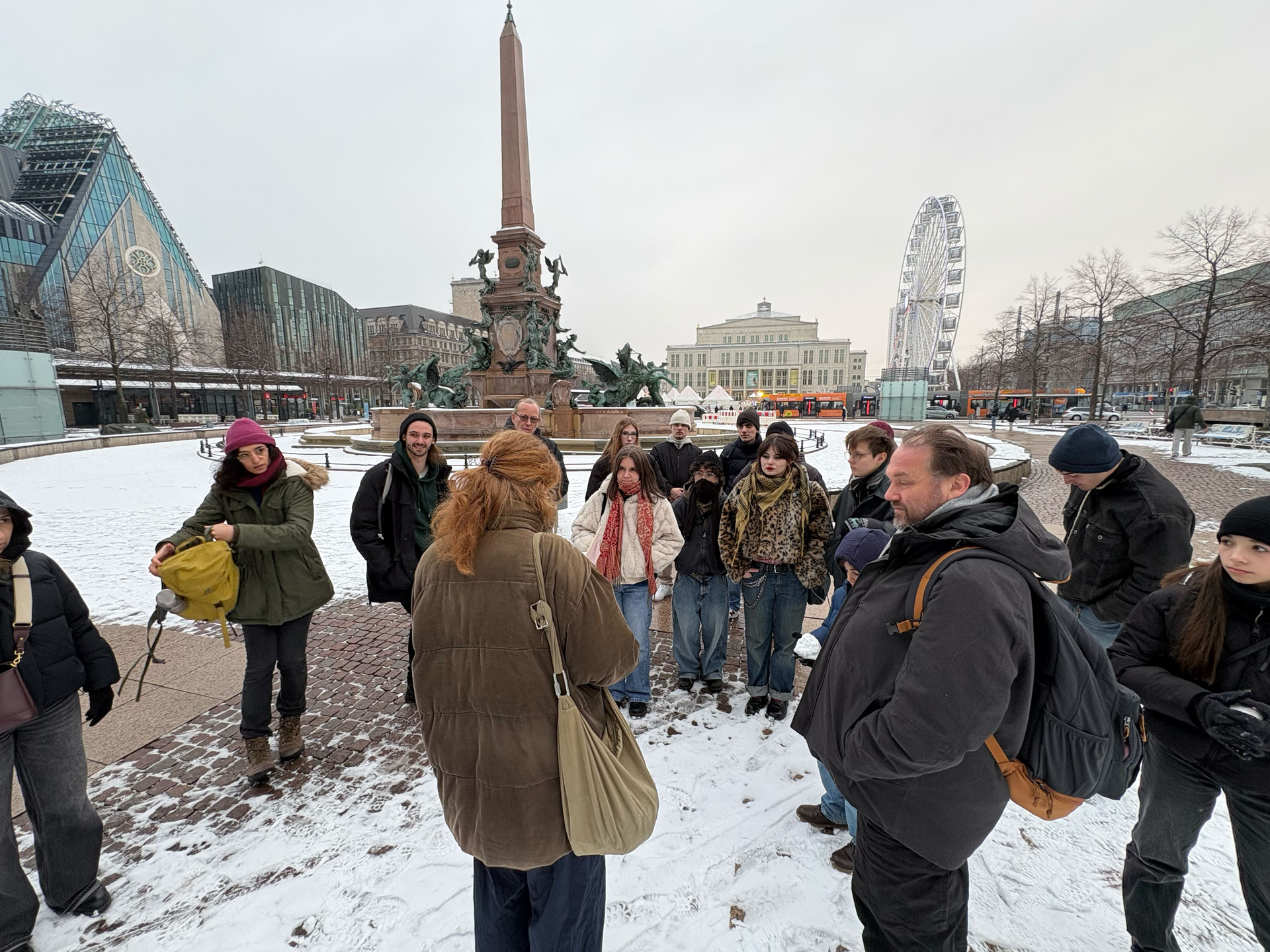
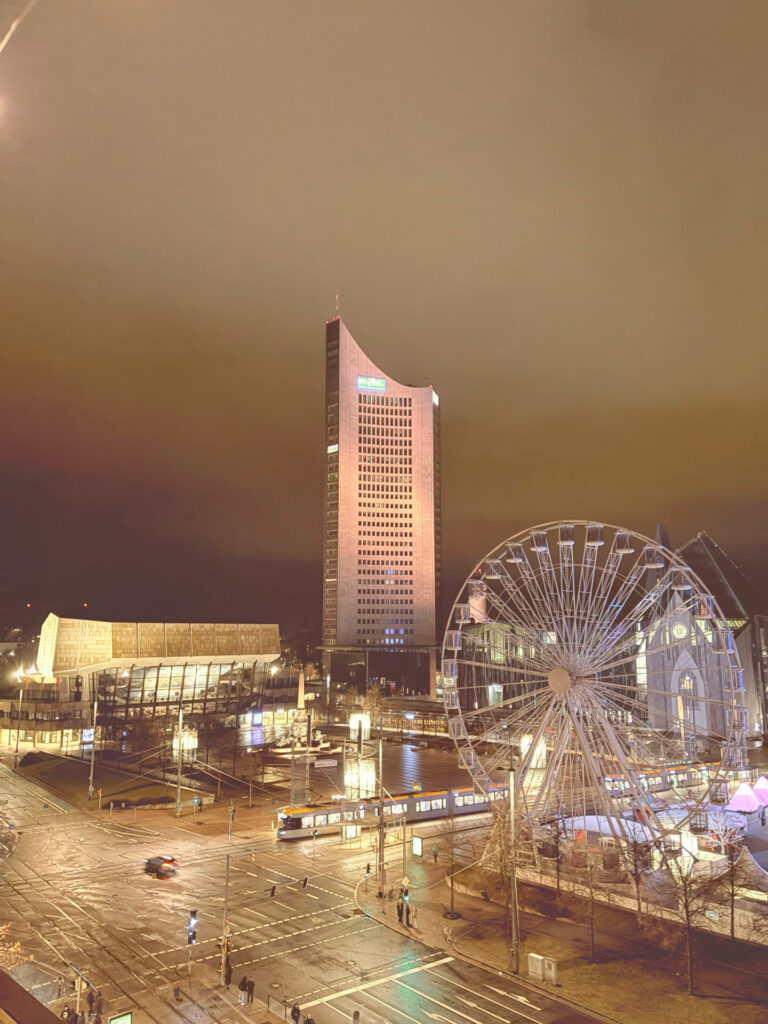
On February 16th, we experienced an unforgettable walk through Leipzig following the Leipziger Notenspur, on a day marked by temperatures around -3 degrees and a cityscape transformed by snow. Despite the cold, the experience was deeply enriching — not only because of the striking beauty of Leipzig in winter, but also thanks to the warm hospitality of our local hosts, who welcomed us with hot tea along the route, creating a strong sense of closeness and shared discovery.
The walk led us through emblematic areas of the historic city center, including Augustusplatz and the surrounding streets, where some of Leipzig’s most important musical institutions are located, such as the Leipzig Opera House and the Gewandhaus Orchestra. These landmarks testify to the city’s long-standing musical tradition and its role as one of Europe’s most significant cultural capitals.
Each stop on the route was accompanied by detailed and engaging explanations, allowing us to better understand Leipzig’s historical and cultural importance in the development of European music. We visited places connected with composers whose presence in the city spans several centuries. Johann Sebastian Bach lived and worked in Leipzig during the first half of the 18th century, serving as Thomaskantor from 1723 until his death in 1750, and composing many of his major works there. In the 19th century, Leipzig became home to Felix Mendelssohn, who founded the Leipzig Conservatory in 1843 and revitalized the city’s concert life, and to Robert Schumann, who spent formative years in Leipzig during the 1830s, closely linked to its musical and literary circles. Richard Wagner, born in Leipzig in 1813, represents another crucial chapter in the city’s musical legacy, while Edvard Grieg studied at the Leipzig Conservatory in the mid-19th century, highlighting the international reach of the city’s musical institutions.
Walking these streets in winter conditions gave the experience a unique atmosphere. Snow-covered squares, silent courtyards and historic façades contrasted with the lively stories of composers, performances and premieres that once animated these same places. The route revealed how music is deeply embedded in the urban fabric of Leipzig, not confined to concert halls but present in churches, homes, schools and public spaces.
This journey became far more than a guided tour: it was a true voyage through music history, where the physical endurance required by the cold weather mirrored the emotional intensity of the narratives shared. The Leipziger Notenspur proved to be a powerful experience between heritage, memory and collective experience, allowing us to understand how Leipzig’s past continues to resonate in its present musical life.
https://www.notenspur-leipzig.de/en/music-routes/leipzig-music-trail/route-and-stations