! POST IN TRANSLATION !
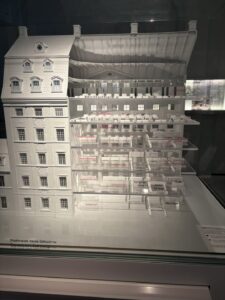
Our visit to the Bach Museum offered a rich and immersive introduction to the life and work of Johann Sebastian Bach, combining historical content with innovative digital experiences. Located next to St. Thomas Church, where Bach worked as Thomaskantor from 1723 until his death in 1750, the museum is housed in a carefully preserved historic building that connects visitors directly with the composer’s daily environment.
More information about the museum can be found at:
https://www.bachmuseumleipzig.de
The Virtual Reality Experience: Bach 360°
One of the highlights of the visit was the Virtual Reality concert experience titled “Bach 360°”. In this immersive installation, a virtual Bach welcomes visitors into a reconstructed Baroque interior and performs several musical excerpts while narrating key moments of his life in Leipzig.
During the experience, Bach explains his role as a church musician, his work with choirs and students, and his intense family life — he was the father of 20 children, many of whom became musicians themselves. For those discovering Bach for the first time, it is striking to learn that he composed music for very concrete occasions such as weekly church services and civic celebrations.
The virtual Bach performs excerpts from works such as the Brandenburg Concertos, movements from his cantatas, and pieces from The Well-Tempered Clavier, creating a vivid bridge between biography and sound.
More about the VR experience:
https://www.bachmuseumleipzig.de/en/bach-360
Interactive Exhibits and Historical Instruments
Beyond the VR concert, the museum offers a wide range of interactive installations, including listening stations, digital scores, and hands-on musical experiments. These allow visitors to explore Bach’s compositions and understand how music was created and performed in the 18th century.
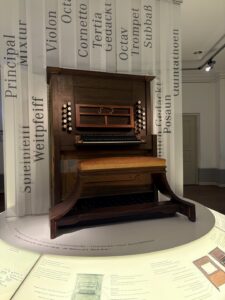
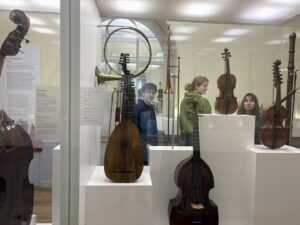
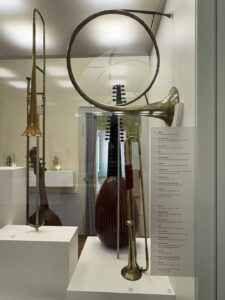
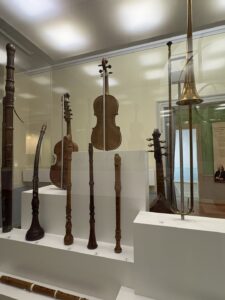
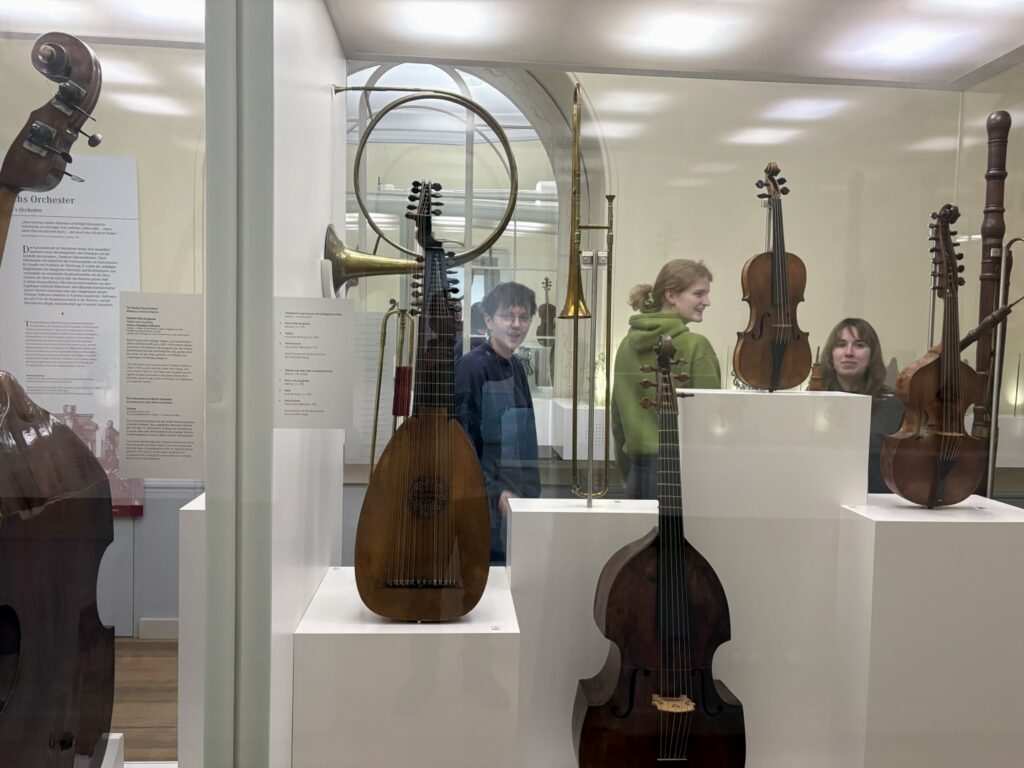
A remarkable part of the collection is the display of historical instruments, such as the harpsichord, clavichord, organ, violin, Baroque flute, and viola da gamba. These instruments help illustrate the sound world in which Bach composed and performed, making the musical context more tangible for younger audiences and first-time visitors.
The Bach Family and Musical Legacy
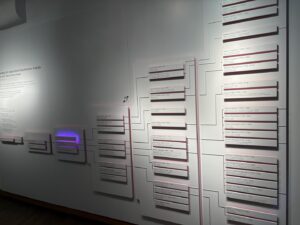
One of the most visually impressive elements of the museum is the giant genealogical tree of the Bach family. It reveals an extraordinary dynasty of musicians spanning several generations, including composers, organists, and instrumentalists. This installation clearly shows that Bach was part of a vast musical network rather than an isolated genius.
Together, the historic building, interactive exhibitions, virtual reality concert, and extensive family history transform the museum visit into a dynamic exploration of music, heritage, and innovation. The Bach Museum Leipzig succeeds in making the world of Johann Sebastian Bach accessible and inspiring for new generations of listeners.